
The Supreme Court has questioned the practice of Governors withholding assent to bills indefinitely, stating that it renders the constitutional provision of 'as soon as possible' meaningless.

The Supreme Court declined to initiate contempt action against a lawyer who hurled a shoe at the Chief Justice of India, citing the CJI's own refusal to proceed against him. The court is considering guidelines to prevent such incidents.

The Supreme Court has upheld the deletion of the 'waqf by user' provision in the amended waqf law, stating it is not arbitrary and addresses potential misuse.

The Supreme Court of India has dismissed a plea against the construction of a new passenger jetty and terminal at the Gateway of India in Mumbai, upholding a Bombay High Court verdict that allowed the project to proceed. The project aims to improve passenger travel between South Mumbai and other locations.

A bench of Justices Surya Kant and N Kotiswar Singh also questioned the authenticity of materials placed before it by petitioner Mohd Ismail and others and refused to stay any further deportation of Rohingyas saying similar relief was denied by the court.

The Supreme Court has directed the CBI to conduct a pan-India investigation into digital arrest scams and questioned the RBI about its lack of AI usage in detecting and freezing accounts used by cybercriminals.

Chief Justice of India Bhushan Ramkrishna Gavai retired, reflecting on his career, commitment to the Constitution, and social justice.

The Supreme Court on Friday directed authorities not to deport to Pakistan six members of a family, who allegedly overstayed their visa, till their citizenship claim is verified.

The ED has accused Congress leaders Sonia Gandhi and Rahul Gandhi, as well as late party leaders Motilal Vora and Oscar Fernandes, along with Suman Dubey, Sam Pitroda, and a private company, Young Indian, of conspiracy and money laundering.
The Supreme Court is examining the extent to which courts can intervene when governors delay or refuse to act on bills passed by state assemblies. The court questioned the Centre on whether judicial review is barred in cases of gubernatorial inaction, sparking debate on the balance of power between states and the central government.

As soon as one of the pleas came up for hearing on Friday, Solicitor General Tushar Mehta, appearing for the Centre, objected and said there can't be an "endless" filing of pleas challenging the Act.
The Supreme Court has questioned the central government about the possibility of constructing a border wall to prevent illegal immigration, drawing parallels with the US border policy. The court also addressed concerns about the detention and deportation of Bengali-speaking migrant workers.

Besides the present CJI Chandrachud, former CJIs Ranjan Gogoi and SA Bobde and former judges Ashok Bhushan and S Abdul Nazeer were part of the bench which had delivered the historic verdict on November 9, 2019.

The Supreme Court expressed serious concern over the Enforcement Directorate summoning advocates for offering legal advice or representing clients during investigations, calling for guidelines on the matter.
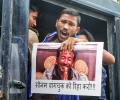
The Supreme Court has sought responses from the Centre and the Ladakh administration regarding the detention of climate activist Sonam Wangchuk under the National Security Act (NSA). Wangchuk's wife has filed a plea challenging the detention, claiming it violates his fundamental rights. The court has given the Centre and Ladakh administration 10 days to respond and has scheduled the next hearing for November 24.
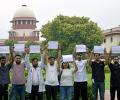
The Supreme Court on Tuesday dismissed the pleas seeking cancellation and re-test of the controversy-ridden National Eligibility-cum-Entrance Test-Undergraduate (NEET-UG) 2024, holding that there was no data on record to indicate a systemic leak of question paper and other malpractices.
The Supreme Court has ruled that a Governor cannot send bills to the President for consideration if the state assembly has already cleared them for a second time. The court was questioning the Centre over the powers of the Governor when it comes to granting assent to bills.
The bench took note of the submissions and fixed Khera's plea for hearing on March 3 making it clear that the interim bail, granted to him on February 23, will remain in force till then.

The Supreme Court of India expressed concerns about the long-term sustainability of providing free rations to migrant workers, emphasizing the need for job creation and capacity building instead. The court's remarks came during a hearing on the ongoing issue of providing relief to migrant workers, a matter that gained prominence during the COVID-19 pandemic. The court questioned the government's reliance on freebies and stressed the importance of creating opportunities for migrant workers to become self-sufficient. The debate highlighted the challenges of balancing immediate relief with long-term economic solutions for vulnerable populations.

A bench comprising Justices BR Gavai and KV Viswanathan took note of the submissions of Solicitor General Tushar Mehta, representing the Gujarat government, and did not pass any interim status quo order in the meantime as sought by the counsel of the Muslim parties.

Justice Sanjiv Khanna, who headed the bench which heard Kejriwal's petition against his arrest in the case, said, "We will pronounce the interim order (on interim bail) on Friday. The main matter related to the challenge to arrest will also be taken on the same day."

In an interim relief, the Supreme Court on Thursday ordered the status quo and said the Delhi High Court-appointed three-member Committee of Administrators (COA) will not take over the affairs of the Indian Olympic Association.

The Supreme Court on Monday dismissed the bail pleas of three convicts serving life term in the 2002 Godhra train burning case, which plunged Gujarat into one of the worst communal riots, terming it a "very serious incident".
The Centre has opposed the imposition of fixed timelines on governors and the President for decisions on bills passed by state legislatures, arguing that such constraints were intentionally omitted by the Constitution's framers.
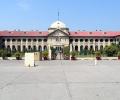
The Supreme Court on Tuesday took exception to the Allahabad high court's recent remarks in a rape case as reportedly saying the complainant "herself invited trouble", and wondered why it made such observations while deciding a bail plea.

The Supreme Court has directed the Delhi government and civic bodies to address the 'extremely grim' stray dog menace by picking up strays and housing them in shelters for sterilization and immunization. The court also warned against obstructing authorities and ordered the creation of a helpline for reporting dog bite cases.

The Supreme Court of India will examine the jurisdiction of the Lokpal, India's anti-corruption ombudsman, in entertaining complaints against sitting high court judges. The court is considering a suo motu proceeding initiated over the Lokpal's January 27 order on the issue. The case involves two complaints filed against a sitting additional judge of a high court, alleging that he influenced a judge of the subordinate judiciary and a judge of the same high court set to deal with a suit filed against the complainant by a private company.

He was produced before the court after the Supreme Court refused to entertain his plea challenging the Delhi high court order which had dismissed his anticipatory bail plea in the corruption case lodged by the CBI arising out of the INX Media scam.
The Supreme Court has announced it will decide in April whether to reconsider its 2022 verdict upholding the Enforcement Directorate's powers to arrest and attach property under the Prevention of Money Laundering Act (PMLA). The court is hearing a batch of pleas seeking a review of the July 2022 verdict, which upheld the ED's powers of arrest and attachment of property involved in money laundering, search and seizure under the PMLA. The verdict came on a batch of over 200 petitions filed by individuals and other entities questioning various provisions of the PMLA.

"Liberty is granted to newly-added respondents (states) to file a response within 15 days from the date of service, and rejoinder if any be filed after 15 days. The interim order to continue and will equally apply to the cases mentioned in the amended writ petition. We direct no further cases be registered without the permission of this court," the bench's order said.

The Bombay high court on Monday refused to grant an interim stay on setting up a fact-checking unit (FCU) under the recently amended Information Technology (IT) Rules to identify fake and false content on social media against the government, noting that no grave and irreparable loss would be caused.

The Chhattisgarh government had on Thursday told the Supreme Court that Baghel never met any high court judge.
The court said the disqualification petitions have to be adjudicated expeditiously.
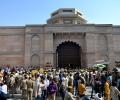
The Supreme Court asked the Varanasi district collector on Friday to ensure that a sufficient number of plastic tubs with water is made available for wazu (ritual ablution) for Muslim devotees at the Gyanvapi mosque complex.
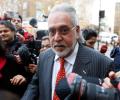
The Centre had on October 5 told the apex court that Mallya cannot be extradited to India until a separate "secret" legal process in the United Kingdom, which is "judicial and confidential in nature is resolved".

A two-judge bench of the top court had on August 11 directed authorities in Delhi-National Capital Region (NCR) to start picking up stray dogs from all localities "at the earliest" and relocate the animals to dog shelters.

The top court also questioned the West Bengal government's decision to hire contractual employees for the protection of doctors and other staff in hospitals.

The Supreme Court on Thursday steered clear of the political talk about it having made an exception for Delhi Chief Minister Arvind Kejriwal in granting him interim bail for campaigning in the Lok Sabha polls but said 'critical analysis of the judgment is welcome'.

The Centre on Thursday assured the Supreme Court that it will neither denotify Waqf properties, including "Waqf by user", nor make any appointments to the central Waqf council and boards till May 5.
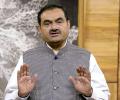
The Supreme Court said on Friday it may consider granting three more months to SEBI for concluding its probe into the allegations of stock price manipulation by the Adani group and lapses in regulatory disclosure, and listed a batch of PILs and plea by the market regulator on May 15. A bench of Chief Justices DY Chandrachud and Justices P S Narasimha and J B Pardiwala said the court registry has received the report of the apex court-appointed Justice (retd) A M Sapre committee on the issue and would like to hear the matter on Monday after perusing the findings of the panel. "We will go through the report in the meantime.
 © 2026 Rediff.com - Advertise with us - Disclaimer - Privacy Policy - Sitemap - Feedback - About us - Terms of use - Grievances